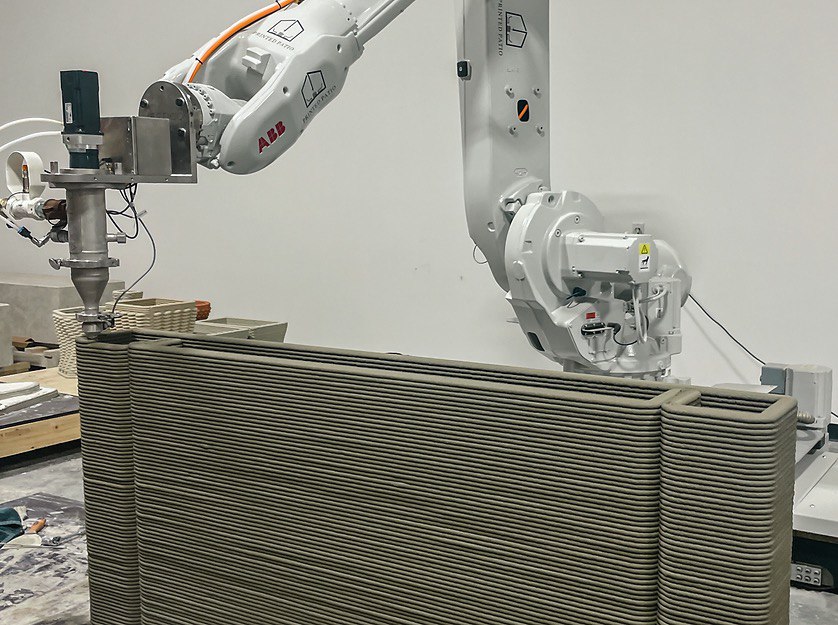
Architect’s design is reformatted by software and sent to a robotic arm that runs a concrete nozzle. Sensors for local temperature and humidity compensate with concrete additives mixed at the nozzle. Scanners monitor for imperfections and re-calculate the model when needed.
Why Build Homes With 3D Printed Concrete?
This innovative technology allows for the creation of structures with enhanced durability and are cost effective.
Opihi.io
Kona based architectural firm:
Principals are Dr. Cory Foulk, PhD, and Ihilani Phillips AIA.
They are specialists in the new 3DCP construction technology. We are currently setting up a facility in Kawaihae on big island.
Section components of new builds will be printed on the Big Island and shipped to Maui for assembly.
3D concrete printing works much like a regular 3D printer
But on a much larger scale and with concrete as the “ink.” Guided by digital designs, a large robotic arm or printer nozzle moves along a predetermined path, extruding specially formulated concrete layer by layer to build walls and structural elements from the ground up.
This concrete quickly hardens, allowing for the construction of complex shapes and designs that traditional building methods would struggle to achieve. As each layer solidifies, the structure takes shape, creating entire buildings with reduced material waste and increased efficiency.
House Zero Lahaina. Series of new concrete homes in approvals process with Maui County.
House Zero Lahaina. Concrete components printed off site for first homes.
Why do we use Roman Cement?
Often called self-healing concrete, buildings with these properties last thousands of years. Homes span generations again, and provide resilience in changing times.
Here are some key features and characteristics of Roman cement:
Composition:Roman cement was primarily composed of lime (calcium oxide), volcanic ash, and water. The volcanic ash, obtained from sources such as Pozzuoli near Naples in Italy, contained silica and alumina, which contributed to the cement’s hydraulic properties.
Hydraulic Properties: One of the distinctive features of Roman cement was its ability to set and harden underwater or in wet conditions. This hydraulic property made it particularly suitable for the construction of structures such as aqueducts and harbors.
Plumbing and electrical can be run easily within the wall cavity. Outlet boxes and rough in for fixtures can be preprinted, with sleeves to allow wire and PEX runs.
You are likely familiar with demonstration projects using 3D printed concrete. This year we are receiving building permits in Hawaii, Washington, and Texas for code compliant habitable structures. —Opihi Design Group, Kona
Custom forms, historically seen in highly expressive installations, have tended to be labor intensive. Museum in Addis Ababa shown here.
Endless unique forms and textures can be programmed into design software and printer routines. These digital elements are either open source, or can be downloaded in an online shop like an app.